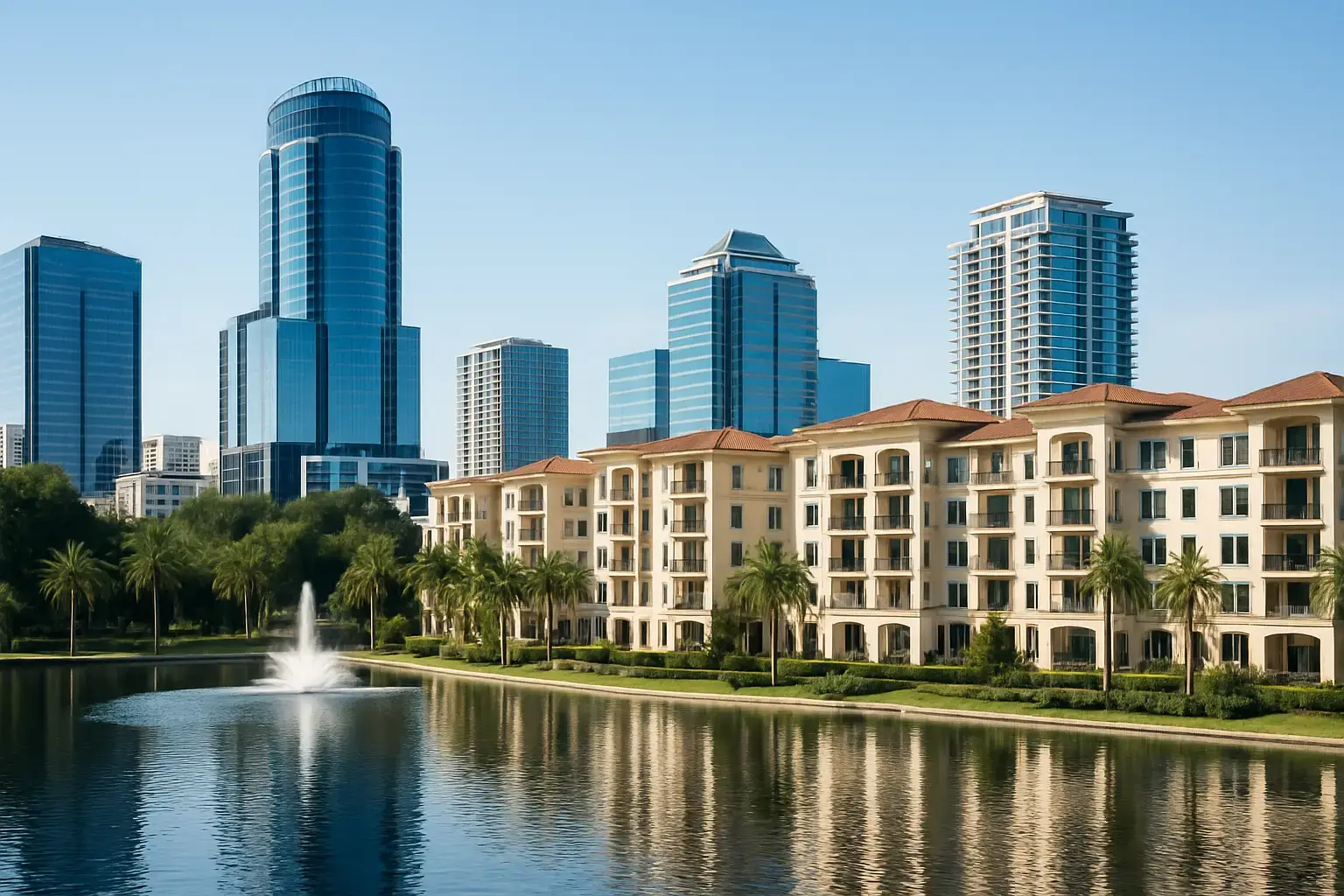
Overview: Why Orlando Matters to Investors in 2026
Orlando’s real estate market in 2026 is unique: it still benefits from strong tourism, ongoing population inflow, and targeted job growth, while showing signs of normalization after post-pandemic volatility. For investors focused on market trends real estate, Orlando combines resilient rental demand with select submarkets offering appreciation upside and yield. This article breaks down the local dynamics investors must track, provides actionable strategies, and answers frequently asked questions about investing in the region.
Macro & Local Drivers Shaping 2026
Understanding Orlando requires both macro context and local nuance. Nationally, monetary policy, inflation trends, and migration patterns set the environment. Locally, Orlando’s economy leans on four pillars:
- Tourism recovery and spending patterns around theme parks and hospitality.
- Population growth driven by domestic migration and remote-work relocations.
- Job diversification in tech, healthcare, and logistics along the I-4 corridor.
- New-construction activity and municipal zoning updates affecting supply.
Those drivers create a market where short-term rental demand remains robust near core tourist nodes, while long-term rental demand grows in suburban employment corridors.
Key Market Trends Real Estate Investors Should Track
1. Price Growth Moderates, Selective Appreciation Continues
After several years of rapid appreciation, Orlando in 2026 shows moderated price growth. Core urban and desirable suburban neighborhoods continue to see appreciation, but the pace is slower and more correlated to job growth and infrastructure improvements. Expect strongest capital appreciation in micro-markets with transit access, reputable school zones, or proximity to employment centers.
2. Rental Market Strength — High Demand, Gradual Yield Normalization
Orlando’s rental market is driven by a mix of seasonal visitors, theme-park workers, students, and long-term residents. Vacancy rates remain below national averages in many neighborhoods, supporting rents. However, cap rates are normalizing as financing costs and new inventory influence yields. Investors focused on cash flow should model conservative rent growth and account for seasonality in neighborhoods with short-term rentals.
3. Short-Term Rentals vs. Long-Term Rentals
Short-term rentals (STRs) near tourist corridors still command premium nightly rates, but local regulations and licensing enforcement have tightened in many municipalities. Insurance and operating costs have increased for STRs, narrowing net yields. Long-term rentals in job-rich suburbs provide more predictable cash flow and lower operational complexity — a tradeoff many institutional and private investors weigh in 2026.
4. New Construction & Supply Dynamics
New supply has picked up, particularly in multi-family developments along the I-4 corridor and near urban infill nodes. While new units absorb quickly given population growth, any overbuild in specific submarkets can temporarily depress rents. Investors should analyze pipeline deliveries at the submarket level rather than relying on city-wide statistics.
5. Financing, Interest Rates & Investor Returns
Financing costs are a major variable for 2026 returns. Many investors are seeing higher debt service compared to 2020–2022, pushing some toward longer-term fixed-rate loans or equity partnerships. Conservative underwriting assumptions—higher vacancy buffers and expense ratios—are now standard in investment pro formas.
Top Orlando Submarkets to Watch
Orlando is not a single market; it is a collection of submarkets with different risk/reward profiles. Here are the ones drawing investor interest:
- Downtown Orlando & Thornton Park: Strong demand for condos and walkable rentals; good for appreciation and short-term appreciation plays.
- Lake Nona: Medical City and new corporate relocations make this a growth engine with steady rental demand and long-term appreciation potential.
- I-Drive & International Drive corridor: High STR opportunity but regulatory and operational risk is higher; best suited for experienced STR operators.
- Winter Park & Maitland: Stable, higher-income neighborhoods with lower volatility; better for buy-and-hold investors seeking steady appreciation.
- Kissimmee & Osceola County: Lower entry prices, strong tourism rental demand, but more cyclical and infrastructure-dependent.
Practical Investment Strategies for 2026
Investors should match strategy to submarket and risk tolerance. Here are concrete approaches:
- Buy-and-hold apartments in job corridors: Target multi-family near employment centers like Lake Nona and I-4 to capture steady income and appreciation.
- Value-add in transitional neighborhoods: Identify older properties near transit or redevelopment corridors where interior and amenity upgrades can raise rents and reposition assets.
- Conservative STRs near attractions: If operating STRs, focus on higher-quality listings, invest in professional management, and ensure full compliance with municipal rules.
- Single-family rentals for scale: In outer suburbs where prices are lower, SFR portfolios can yield attractive returns if acquired with realistic rents and expense assumptions.
Due Diligence Checklist for Orlando Investments
Use this checklist to reduce surprises:
- Analyze submarket supply pipeline (deliveries by year).
- Review local zoning, short-term rental regulations, and licensing requirements.
- Check property-level insurance availability and cost trends.
- Model financing with higher interest and contingency buffers.
- Assess seasonal demand and tenant turnover in the chosen neighborhood.
- Factor in property management costs or STR management fees.
Risks & How to Mitigate Them
Key risks in Orlando for 2026 include regulatory changes for STRs, rising insurance and construction costs (especially from hurricane exposure), and localized oversupply. Mitigation tactics:
- Favor properties outside the highest regulatory risk zones for STRs or secure long-term rental conversions as a fallback.
- Buy insurance policies with clear coverage and shop for bundled options through experienced brokers.
- Diversify across submarkets—combine high-yield tourism-adjacent assets with stable, employment-oriented holdings.
Case Example: A Balanced Orlando Portfolio
Consider a hypothetical $2 million allocation diversified across three assets:
- $800k in a stabilized 8–12 unit multifamily property near Lake Nona for steady cash flow.
- $600k in two renovated SFRs in suburban Kissimmee for rental yield and lower entry price.
- $600k in a professionally managed STR condo near International Drive with strict compliance and conservative revenue projections.
This mix balances appreciation potential, cash flow, and tourism upside while mitigating concentration risk.
Data Sources & Local Partners to Monitor
Track these resources for the most accurate view of market trends real estate in Orlando:
- Orange County property appraiser and Polk/Osceola county office data.
- Local MLS reports and monthly multi-family market reports from regional brokers.
- University of Central Florida economic studies and workforce data.
- Local planning & zoning board meeting minutes for upcoming changes.
Investor Action Plan — 90 Days
- Decide strategy: buy-and-hold, value-add, STR, or SFR scale.
- Choose 1–2 target submarkets and subscribe to local MLS and pipeline reports.
- Run pro formas with conservative financing and expense assumptions.
- Engage a local property manager and insurance broker for preliminary quotes.
- Identify 3-5 properties for in-person due diligence.
Frequently Asked Questions (FAQ)
Q: Is Orlando still a good market for real estate investors in 2026?
A: Yes — but it depends on strategy and location. Orlando remains attractive due to population growth, tourism, and job diversification. Prioritize submarkets with strong employment or infrastructure fundamentals and account for regulatory and insurance factors.
Q: Are short-term rentals still profitable in Orlando?
A: STRs can be profitable, especially near major attractions, but margins are tighter due to higher operating costs, stricter regulations, and insurance. Professional management and regulatory compliance are essential.
Q: Should I expect rapid appreciation in 2026?
A: Rapid city-wide appreciation is unlikely. Appreciation will be selective—concentrated in neighborhoods with strong demand drivers like transit access, top schools, or new employment centers.
Q: How should I underwrite financing in 2026?
A: Use conservative interest-rate assumptions, add larger vacancy and expense buffers, and stress-test cash flows for potential economic slowdown. Consider fixed-rate financing if available and aligned with your hold period.
Conclusion: Positioning for Local Opportunity
Orlando in 2026 presents a nuanced picture: resilient demand and targeted growth pockets, tempered by financing and regulatory challenges. For investors, success comes from submarket selection, conservative underwriting, and strong local partnerships. By focusing on data-driven market trends real estate and executing a disciplined due diligence process, investors can build portfolios that capture Orlando’s upside while managing downside risks.

Ready to invest in Orlando?
Get a Personalized 2026 Orlando Market Brief and Investment Roadmap
Request a custom market brief tailored to your investment goals. We’ll analyze submarket supply, rental comps, projected returns, and financing scenarios for your target properties — then schedule a 30-minute strategy call with a local specialist to identify your best entry points in Orlando’s 2026 market.